
Welcome to your ultimate best productivity apps guide. We created this comprehensive best productivity apps review to share some amazing ideas. This piece offers practical best productivity apps tips and a clear best productivity apps comparison. Our goal is simple. We want to help you find the perfect tools. The digital world feels cluttered. Notifications buzz constantly. Countless tabs scream for our attention. Finding focus seems almost impossible. You need a system. The right applications can build that system for you. Consequently, you can reclaim your time and energy. This guide cuts through the noise. We will explore the top gear for your digital life. Let’s build your ultimate productivity stack.
Table of contents
A Comprehensive Best Productivity Apps Guide: Why Bother?
Productivity is a deeply personal journey. What works for one person might fail for another. Many of us download a new app with high hopes. We expect it to magically organize our lives. Sadly, that magic rarely happens. The app gets forgotten after a week. Then, we return to our old, chaotic methods. Does this sound familiar? The problem isn’t always the app itself. Instead, it is often a lack of strategy. A good tool requires a good system. Therefore, this guide isn’t just a list. It’s a framework for thinking about productivity. We will help you build a system that sticks.
Decoding Productivity: More Than Just Ticking Boxes (Best Productivity Apps Ideas)
Let’s be honest for a moment. True productivity isn’t about doing more things. It’s about doing the right things effectively. It involves managing your energy, not just your time. You need clarity on your goals. After that, you need a clear path to achieve them. This is where apps become powerful allies. They can offload mental clutter. For instance, they remember deadlines so you don’t have to. They organize complex projects into simple steps.
However, a common mistake is “app-hopping.” This is the endless search for the perfect tool. I’ve been guilty of this myself. You spend more time setting up apps than doing actual work. The solution is to create a “productivity stack.” This is a small, curated set of tools that work together. Each app serves a specific purpose. Together, they create a seamless workflow. This guide will give you the best ideas for building your own stack.
The CoYour Best Productivity Apps Review
We have broken down our top picks into essential categories. Most people need a tool for tasks, notes, and scheduling. Some also benefit from focus and habit apps. We will explore the best options in each category. This review focuses heavily on apps popular in the best productivity apps US market. We will look at their strengths, weaknesses, and ideal users.
Mastering Your Tasks (Best Productivity Apps vs. Old Methods)
Pen and paper have a certain charm. Yet, digital task managers offer unparalleled power. They provide reminders, recurring tasks, and collaboration features. You can access your to-do list from any device. This is a huge advantage over a physical notebook. Let’s compare some of the heavyweights in this space.
1. Todoist: The Balanced Champion
Todoist is a fan favorite for a reason. It strikes a perfect balance between simplicity and power. The interface is clean and intuitive. However, beneath the surface lies a robust set of features. You can create projects, sub-tasks, and labels. Its natural language input is fantastic. Simply typing “Schedule meeting tomorrow at 10 am #Work” creates the task perfectly.
Who is it for?
Todoist is for almost everyone. It suits individuals, students, and small teams. Its flexibility makes it a great starting point. If you feel overwhelmed by complex project management tools, try Todoist.
Best Features:
- Natural Language Input: Quickly add tasks with dates and projects.
- Karma System: Gamifies productivity by tracking your progress.
- Excellent Integration: Works with calendars, email clients, and more.
A Common Mistake:
New users often ignore labels and filters. They just dump everything into the inbox. Take 30 minutes to set up a few key projects (e.g., Work, Personal, Errands). Then, use labels for context (e.g., @computer, @phone, @urgent). This simple setup transforms Todoist from a messy list into a powerful organizer.
2. Things 3: The Design Masterpiece
Things 3 is beautiful. There is no other way to put it. Its design is thoughtful, clean, and a joy to use. The app operates on the “Getting Things Done” (GTD) methodology. It has an Inbox for quick capture. The “Today” view shows your plan for the day. Furthermore, the “Upcoming” view shows what’s on the horizon. It makes task management feel calm and controlled.
Who is it for?
This app is exclusively for Apple users. It’s perfect for individuals who value design and a structured workflow. If you are deep in the Apple ecosystem, its seamless sync is a dream. It is less suited for team collaboration.
Best Features:
- Award-Winning Design: An incredibly polished and intuitive user interface.
- Project Headings: Break down large projects into manageable sections.
- Magic Plus Button: Drag and drop it anywhere to create a new task.
A Quick Tip:
Use the “When” feature deliberately. Don’t assign a date to every task. Assign a date only if it must be done on that specific day. For everything else, leave it in the “Anytime” or “Someday” lists. This keeps your “Today” view sacred and focused.
3. Microsoft To Do: The Practical Integrator
Microsoft To Do evolved from the beloved Wunderlist. It’s a straightforward and effective task manager. Its standout feature is its deep integration with the Microsoft ecosystem. Tasks from Outlook are automatically synced. The “My Day” feature provides a clean slate each morning. You can then pull tasks from your other lists to plan your day.
Who is it for?
This is a must-have for heavy users of Microsoft 365. If your work revolves around Outlook and other Microsoft products, To Do fits perfectly. It’s also completely free, which is a significant advantage.
Best Features:
- Microsoft 365 Integration: Seamlessly connects with your work ecosystem.
- My Day: A smart daily planner that encourages a fresh start.
- Collaboration: Share lists easily with colleagues or family.
How to Start:
Connect your Microsoft account immediately. Explore the “Assigned to me” and “Flagged email” smart lists. These lists automatically pull in your action items from other Microsoft apps. This integration is its core strength. Don’t treat it as just a standalone app.
| Task Manager Comparison | Todoist | Things 3 | Microsoft To Do |
|---|---|---|---|
| Pricing | Freemium; Pro plan at ~$4/mo | One-time purchase (~$50 for Mac) | Free |
| Platform | All platforms | Apple only | All platforms |
| Best For | Overall flexibility & power | Apple users valuing design | Microsoft 365 users |
| Key Feature | Natural language input | GTD workflow & UI | Outlook integration |
Capturing Genius: Your Digital Brain (Best Productivity Apps Comparison)
Our brains are for having ideas, not holding them. A good note-taking app acts as a “second brain.” It’s a place to capture thoughts, store information, and connect ideas. This category has seen incredible innovation recently. The competition is fierce. Here’s a best productivity apps comparison of the top contenders.
4. Notion: The All-in-One Workspace
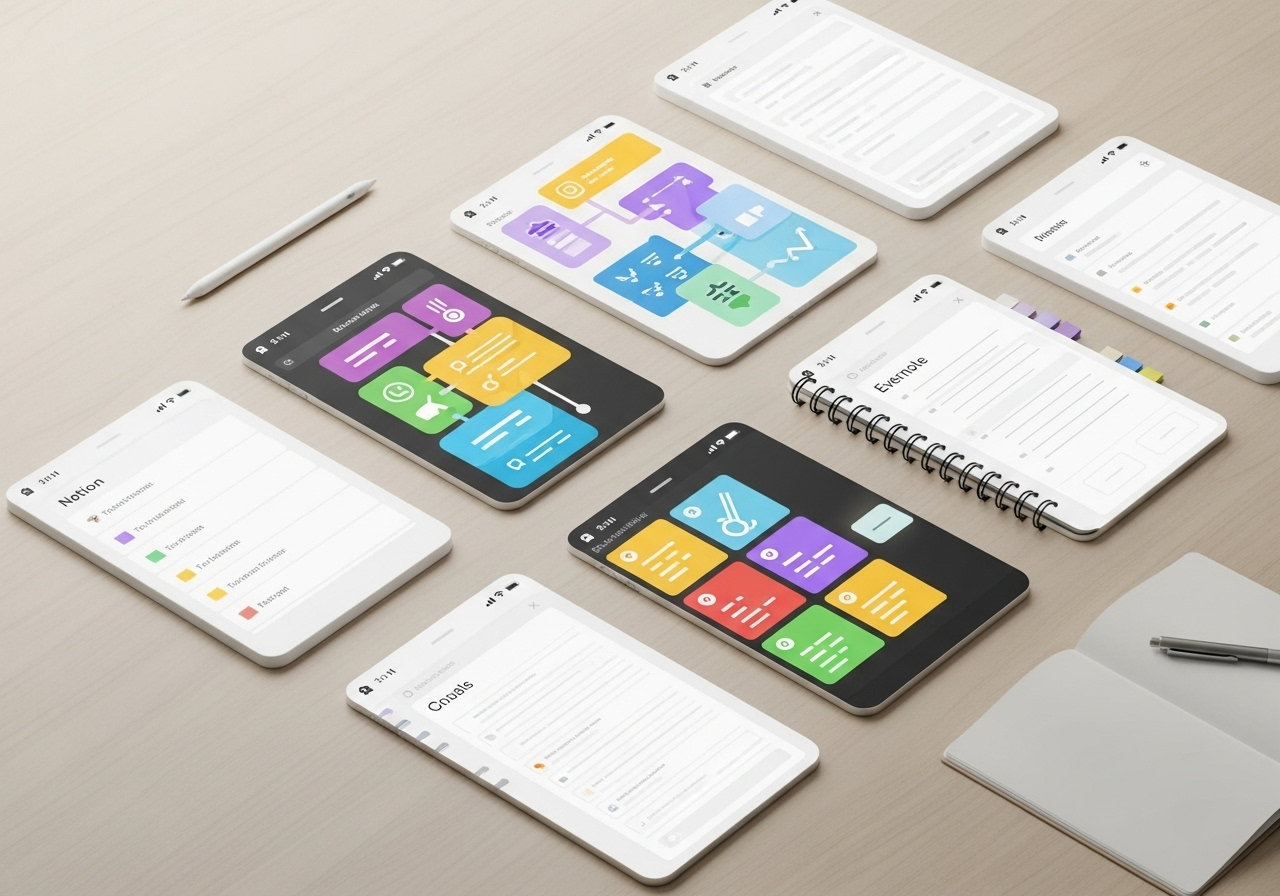
Notion is more than a note-taking app. It is a set of building blocks. You can create custom databases, wikis, and project trackers. People use it to run their entire lives and businesses. Its flexibility is its greatest strength and its biggest weakness. The possibilities are endless. This can lead to a steep learning curve.
Who is it for?
Notion is for tinkerers and system-builders. It’s ideal for students, content creators, and teams who want a single, customized workspace. If you love organizing information and building personal dashboards, you will love Notion.
Best Features:
- Databases: Create powerful, filterable tables for anything (trackers, CRMs, etc.).
- Templates: A vast community-driven library of templates for any use case.
- Flexibility: Combine text, images, tables, and embeds on any page.
A Common Mistake:
Trying to do too much, too soon. New users often download a complex template from a “Notion guru.” Consequently, they get overwhelmed and quit. My advice? Start with a blank page. Just write. Create a simple to-do list. Then, create a simple table. Gradually learn the features as you need them. Build your own system, don’t just copy someone else’s.
5. Evernote: The Reliable Veteran
Evernote has been around for ages. It was the king of note-taking for a long time. After a period of stagnation, it has recently made a comeback. It has a redesigned interface and new features. Its core strength remains its powerful search and web clipper. Evernote is exceptional at capturing and finding information from anywhere.
Who is it for?
Evernote is for researchers, professionals, and anyone who needs to archive a lot of information. If your main goal is to save articles, scan documents, and organize research, Evernote excels.
Best Features:
- Web Clipper: The best browser extension for saving articles and webpages.
- Powerful Search: Can search inside PDFs and even handwritten notes.
- Document Scanning: Use your phone camera to create high-quality scans.
A Quick Tip:
Develop a consistent tagging system from day one. Don’t rely solely on notebooks for organization. Tags are more flexible. A single note can have multiple tags (e.g., #receipt, #2024, #taxes, #work). This makes finding specific information much easier as your archive grows.
6. Obsidian: The Power User’s Network
Obsidian is different. It’s a local-first application. Your notes are stored as plain text files on your computer. This gives you full ownership and privacy. Obsidian’s superpower is bidirectional linking. You can create links between notes, forming a network of your thoughts. This helps you discover connections you never knew existed.
Who is it for?
Obsidian is for writers, academics, and deep thinkers. It’s for people who want to build a personal knowledge base that grows over time. The learning curve can be steep. However, the payoff is immense.
Best Features:
- Local-First: You own your data. It’s private and future-proof.
- Graph View: Visually explore the connections between your notes.
- Extensible: A massive library of community plugins to add any feature you can imagine.
How to Start:
Don’t worry about plugins or complex themes at first. Just start writing. Create a “Daily Note” every day. Write down your thoughts, tasks, and learnings. Then, use double brackets [[like this]] to create links to new or existing notes. This simple habit is the foundation of building a powerful knowledge graph.
Owning Your Time (Best Productivity Apps How To)
Your calendar is not just for appointments. It is a tool for designing your life. Proactive scheduling, or “time blocking,” is a powerful technique. You schedule blocks of time for your most important tasks. This ensures you make progress on your goals. A great calendar app makes this process easy and enjoyable. Here’s a quick best productivity apps how to for time management.
7. Fantastical: The Language Whiz
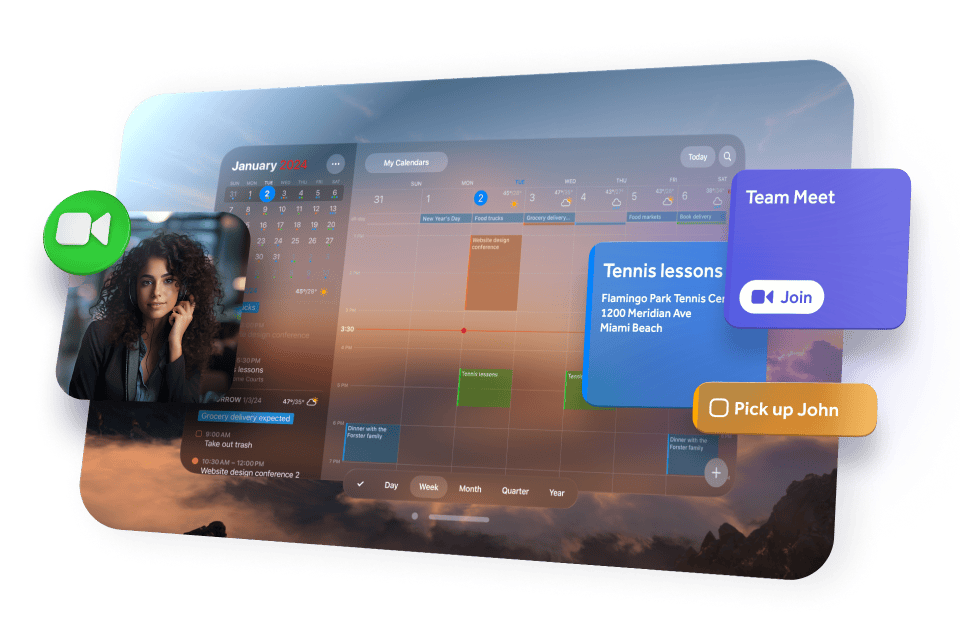
Fantastical’s main selling point is its incredible natural language parsing. Just like Todoist, you can type “Lunch with Sarah next Tuesday at 1 pm at The Cafe” and it will create the event perfectly. It integrates with your existing calendars (Google, iCloud, etc.). Additionally, it combines your tasks and events in one unified view.
Who is it for?
It’s for busy professionals who need to schedule things quickly. If you live by your calendar and want the fastest way to manage it, Fantastical is a top choice. It’s available on Apple platforms.
Best Features:
- Natural Language Engine: The fastest way to create events and reminders.
- Calendar Sets: Create different views for work and personal life.
- Weather Forecast: Integrated directly into your calendar view.
8. Cron (by Notion): The Minimalist’s Choice
Cron was a popular minimalist calendar app that was recently acquired by Notion. It has a beautiful, clean design. It also has great features for team collaboration, like sharing availability. Its menu bar feature provides a quick glance at your upcoming schedule. The focus is on speed and simplicity.
Who is it for?
It’s for individuals and teams who want a beautifully designed, fast calendar. Its integration with Notion is also becoming a key feature. If you are already a Notion user, Cron is a natural fit.
Best Features:
- Sleek Design: A clutter-free and visually appealing interface.
- Availability Sharing: Easily send your open slots to others.
- Multiple Time Zones: Effortlessly manage schedules across the globe.
Defeating Distraction (Best Productivity Apps Tips)
In today’s world, the ability to focus is a superpower. Our devices are designed to distract us. These apps are designed to fight back. They help you build better habits and protect your attention. Here are some of our top best productivity apps tips for staying focused.
9. Forest: Grow Your Focus
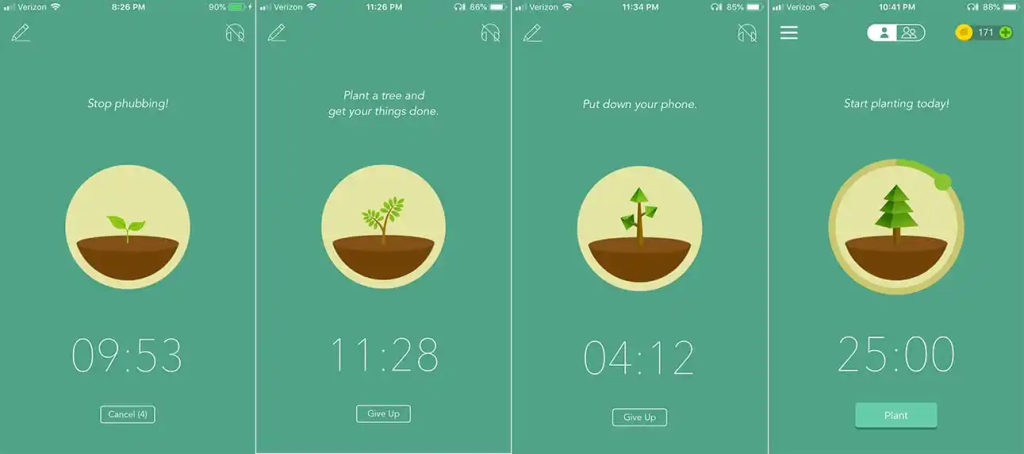
Forest is a clever and charming focus app. When you want to focus, you plant a virtual tree. The tree grows while you work. However, if you leave the app to check social media, your tree withers and dies. Over time, you can grow a beautiful forest, representing your focused hours. It’s a simple but effective psychological trick.
Who is it for?
It’s for students, writers, and anyone who struggles with phone addiction. The gamified approach makes focusing feel rewarding.
10. Streaks: Build Better Habits
Streaks is a habit-tracking app with a minimalist design. You set up to twelve habits you want to build. Each day you complete a habit, your streak grows. The goal is to not break the chain. It integrates with the Apple Health app to automate tracking for things like walking or mindfulness minutes.
Who is it for?
It’s for anyone who wants to build positive daily routines. Its simplicity is its strength. It focuses you on a small number of habits, increasing your chances of success.
Best Productivity Apps US Trends
The trend in the best productivity apps US market is moving away from finding one “super app.” Instead, people are building personalized stacks. The key is to find apps that integrate well. For instance, your task manager should be able to create tasks from your email or notes. Your calendar should pull in tasks with deadlines. A well-built stack feels like a single, cohesive system tailored to you.
The ‘How To’ Guide for Your Personal System (Best Productivity Apps How To)
Building your stack can be fun. But remember the goal: to get more done, not to play with more apps. Here is a practical best productivity apps how to for building your own system.
Step 1: Identify Your Core Needs.
What are your biggest pain points? Do you forget tasks? Is your research a mess? Are you always distracted? Be honest with yourself. Choose one or two areas to focus on first.
Step 2: Start with One Category.
Don’t try to change everything at once. Start with a task manager. Use it consistently for two weeks. Learn its features. Build the habit of capturing every task. Only then should you consider adding a note-taking app or a new calendar.
Step 3: Look for Integrations.
Choose tools that talk to each other. For example, Todoist integrates with Fantastical. You can see your tasks right on your calendar. Notion is integrating with Cron. This creates a powerful link between your knowledge base and your schedule. These connections reduce friction and save time.
Example Productivity Stacks
- The Apple Minimalist: Things 3 (Tasks) + Apple Notes (Notes) + Fantastical (Calendar). This is a beautiful, seamless, and powerful stack for those in the Apple ecosystem.
- The Cross-Platform Powerhouse: Todoist (Tasks) + Evernote (Notes) + Google Calendar. This stack works on every device and offers robust, reliable performance.
- The Knowledge Builder: Obsidian (Notes/Knowledge) + Todoist (Tasks) + Cron (Calendar). This is for deep thinkers who want to connect ideas while managing daily execution.
- The All-in-One Aspirant: Notion (Tasks, Notes, Projects) + Cron (Calendar). This stack aims to keep everything in one place, which is ideal for those who love customization.
The Best Productivity Apps Comparison
We have covered a lot of ground. We’ve explored different categories and top-tier apps. Now it’s time to bring it all together. The most important thing to remember is this: The best productivity app is the one you consistently use. An amazing app that you never open is useless. A simple app that you use every day is priceless.
Making the Right Choice for You (Best Productivity Apps Review)
Your choice depends on your personality, your work, and your tech ecosystem. Are you a designer who loves beautiful interfaces? Things 3 might be your perfect match. Are you a researcher who needs to save everything? Evernote’s web clipper is unbeatable. Are you a student building a personal knowledge base? The linked thinking of Obsidian could change your life. Do you just need a simple, free to-do list that works everywhere? Microsoft To Do is a fantastic option.
This final table offers a comprehensive best productivity apps comparison. Use it as a final best productivity apps review to help you decide.
| App | Category | Pricing | Learning Curve | Best For |
|---|---|---|---|---|
| Todoist | Task Management | Freemium | Low | All-around flexibility and cross-platform use. |
| Things 3 | Task Management | One-time fee | Low | Apple users who value elegant design. |
| Microsoft To Do | Task Management | Free | Very Low | Users heavily invested in the Microsoft 365 ecosystem. |
| Notion | Notes & More | Freemium | High | Tinkerers and teams who want an all-in-one workspace. |
| Evernote | Note-Taking | Freemium | Medium | Archiving web content and document scanning. |
| Obsidian | Note-Taking | Free (paid sync) | High | Building a long-term, private personal knowledge base. |
| Fantastical | Calendar | Subscription | Low | Apple users who need fast, natural language scheduling. |
| Cron | Calendar | Free | Low | Minimalists and Notion users who want a clean calendar. |
| Forest | Focus | Paid (one-time) | Very Low | Individuals who get easily distracted by their phones. |
| Streaks | Habit Tracking | Paid (one-time) | Very Low | Anyone looking to build consistent, positive daily habits. |
Your productivity journey is an ongoing experiment. Don’t be afraid to try a new tool. But give each one a fair shot. Commit to using it for at least a month before deciding. The goal is to find a system that feels less like a chore and more like a natural extension of your mind. Technology should serve you, not the other way around. Choose your tools wisely. Then, get back to doing the meaningful work they are supposed to support.
What’s in your productivity stack? Let us know your favorite combinations.
Add your first comment to this post